
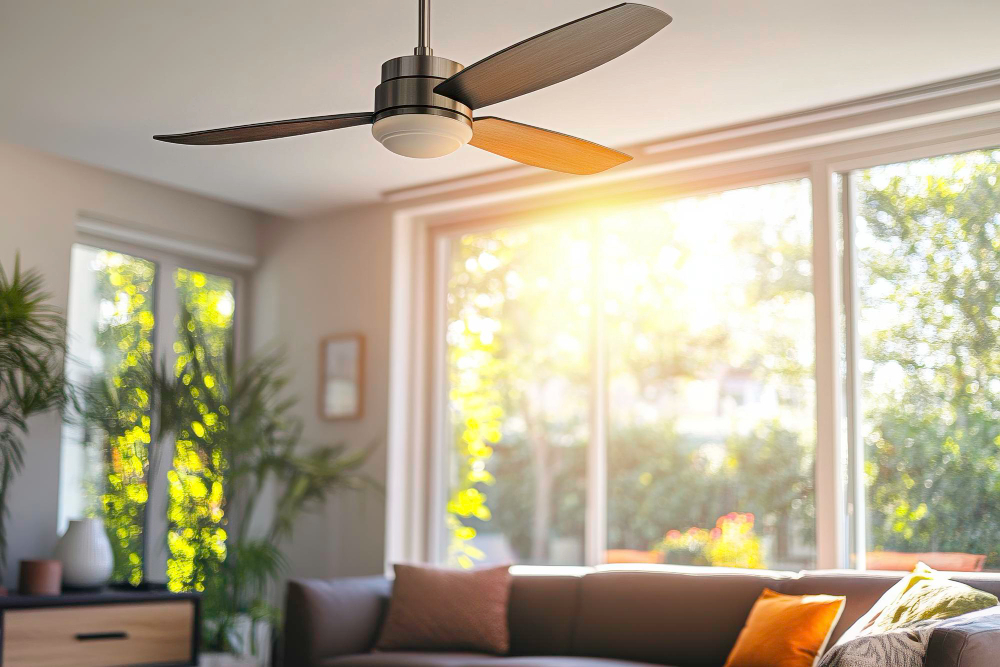
Electricity bills can rise faster than expected when cooling appliances run for hours every day. Ceiling fans are used almost daily, so choosing the wrong fan can quietly affect long-term energy costs.
An energy saving ceiling fan gives homeowners a practical way to improve everyday comfort while keeping power usage under control.
This guide shares what to look for before buying, how energy-efficient fans support better cooling, and why Rezo Group’s ceiling fans are a suitable choice for homes, rental units, and small commercial spaces.
DC VS AC Motors: What Makes a Ceiling Fan Energy Efficient?
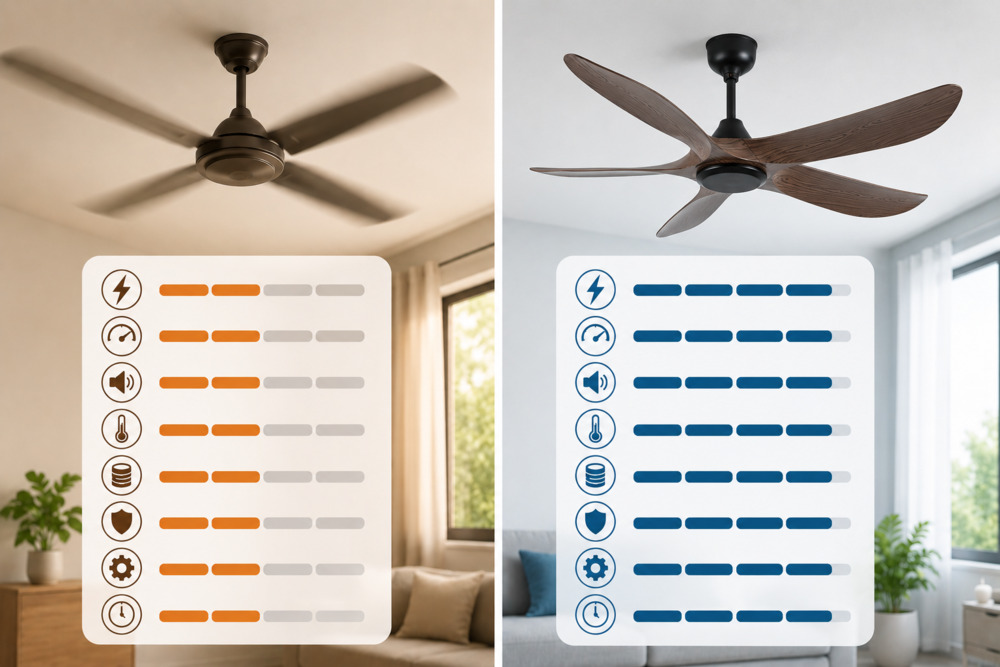
The difference between a conventional AC motor fan and a modern energy efficient ceiling fan comes down to the motor technology inside.
AC motor fans are the older and more common type of ceiling fan. They are usually cheaper to buy, but they use more electricity, especially when switched on for long hours.
DC motor fans use Inverter DC technology to control power better. The fan uses only the power needed for each speed, so it can help reduce electricity usage over time.
Here is a quick comparison:
| Feature | Conventional AC Fan | Inverter DC Fan |
| Average wattage | 55-75W | 15-35W |
| Energy saving potential | Baseline | Up to 70% less |
| Speed settings | 3 speeds | 6+ variable speeds |
| Noise level | Moderate | Near silent |
| Lifespan | 5-8 years | 10-15 years |
| Upfront cost | Lower | Moderate to higher |
Rezo Group’s range of Inverter DC ceiling fans in Malaysia is built around this technology, delivering over 70% cost reduction compared to conventional fan models without compromising on airflow performance or design quality.
Speak to Rezo Group today to find an authorised dealer who can guide you through the right energy saving ceiling fan for your home or business space.
Why Malaysian Homeowners Are Switching from AC Fans to DC Fans
Malaysia’s warm and humid weather means ceiling fans often run for long hours every day. Over time, the difference between an AC fan and a DC fan can show up clearly on your electricity bill.
Consider this: a conventional 65W fan running 10 hours daily uses approximately 237 kWh per year. A DC fan at 25W under the same conditions uses around 91 kWh, a saving of roughly 146 kWh annually per fan. For a home with three fans running on that schedule, that adds up quickly.
For homes with several fans, that saving adds up. It also makes energy-efficient ceiling fans a smarter upgrade for homeowners, rental units, and property investors.
How to Choose the Most Energy Efficient Ceiling Fan for Your Space

Before buying an energy-saving ceiling fan, it helps to look past the label and check what affects daily performance. Here are the key factors to consider:
1. Type of Room and Fan Fit
Different rooms need different fan sizes because airflow depends on layout, ceiling height, and daily usage.
- Bedroom: 36 to 42 inch fan for gentle, comfortable airflow
- Study room or small dining area: 42 to 48 inch fan for steady cooling
- Living room: 52 to 56 inch fan for wider air circulation
- Open-plan area or commercial space: 60 inch and above, or multiple fans for balanced airflow
A fan that is too small may need to run at high speed too often. A fan that is too large can create uncomfortable airflow without improving cooling.
2. Motor Type: DC Over AC
For energy efficiency, DC motor fans are the clear winner. When evaluating ceiling fan energy efficient models, look specifically for Inverter DC technology.
This is the same principle behind inverter air conditioners, applying variable-speed motor control to significantly reduce power draw at lower fan settings.
3. Number of Speed Settings
More speed settings give you finer control over comfort and power consumption. A fan with only 3 speeds forces you to choose between too little airflow and full power.
DC fans typically offer 6 or more speed levels, letting you find the exact setting that keeps you comfortable without wasting electricity.
4. Blade Design and Pitch
Blade pitch (the angle of the blades) affects how efficiently air is moved. A pitch between 12 and 15 degrees is generally ideal for moving a high volume of air without straining the motor.
Wider, aerodynamically shaped blades also help distribute airflow more evenly across larger spaces.
5. Energy Star or Equivalent Certification
Look for fans carrying relevant energy efficiency certifications. These are tested to confirm that their power consumption matches the rated specifications, giving you confidence that the energy saving claims hold up.
Learn more about how to choose a ceiling fan along with ceiling fan design to help you make better purchasing decisions.
Where Energy Saving Ceiling Fans Work Best
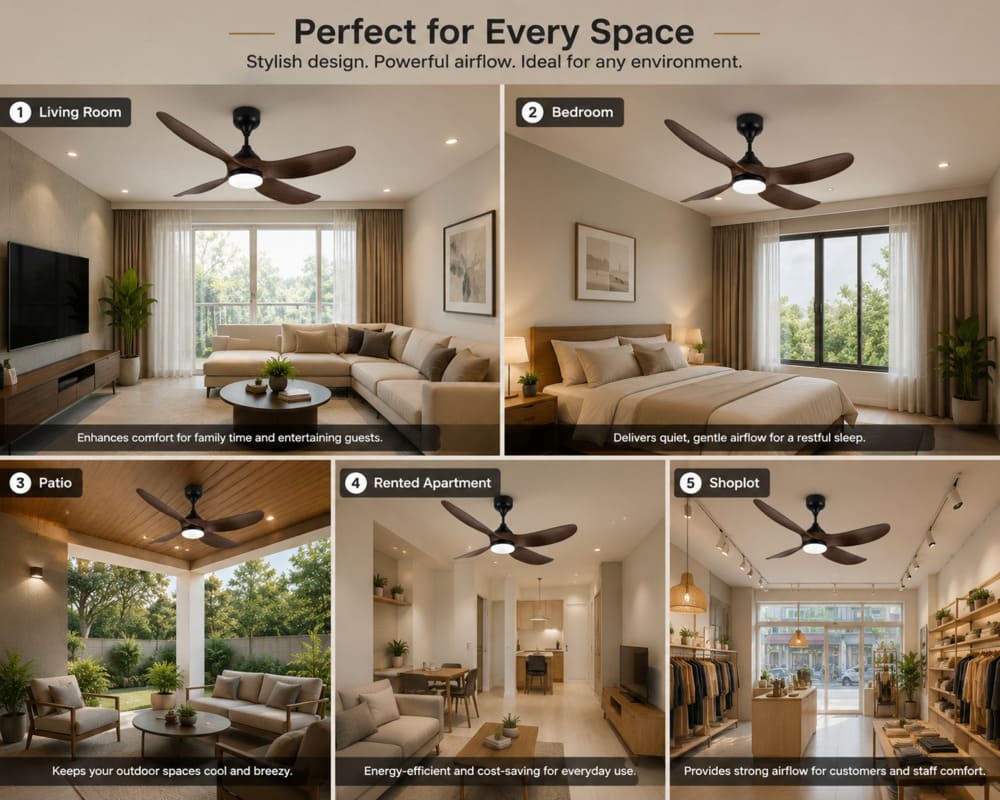
An energy saving ceiling fan works best in spaces where cooling is used often. The biggest difference is usually felt in rooms that stay warm, feel stuffy, or need airflow for long hours.
1. Living rooms and open-plan areas
High-traffic rooms that run fans for the longest hours benefit most from DC technology. A single energy efficient fan here can offset a meaningful portion of your monthly bill.
2. Bedrooms
Sleep quality improves with quieter fans running at lower speeds through the night. DC fans at reduced speeds draw as little as 5-8W, making them ideal for overnight use.
3. Outdoor covered areas
Damp-rated DC fans for patios and alfresco spaces keep outdoor entertaining areas comfortable without adding significantly to running costs.
4. Rental properties and serviced apartments
Property investors fitting out multiple units benefit from the cumulative energy savings across every room in every unit, reducing both operating costs and the appeal-killing noise of cheap AC fans.
5. Shophouses and small commercial spaces
For business owners managing their own premises, replacing conventional fans across a shopfront or office space with DC models is a low-disruption upgrade with clear payback over 12 to 24 months.
Reach out to Rezo Group today to connect with an authorised dealer and choose an energy saving ceiling fan that fits your room, design preference, and long-term cooling needs.
The Rezo Group Difference: Quality You Can Feel, Savings You Can Measure

Rezo Group gives homeowners a way to upgrade their cooling setup without turning the home into a renovation project. Its Inverter DC ceiling fans are made for daily use, helping reduce wasted power while keeping the space comfortable for longer hours.
| Feature | Normal Ceiling Fan | Rezo Group Ceiling Fan |
| Motor System | Uses a conventional AC motor | Uses Inverter DC technology for better power control |
| Energy Usage | Consumes more electricity during long daily use | Reduces running cost by over 70% compared to conventional models |
| Cooling Comfort | May need higher speed to feel effective | Delivers steady airflow using lower power |
| Daily Usage Fit | Less ideal for rooms where fans run many hours | Built for homes where fans are used throughout the day |
| Noise Control | Can feel louder, especially after long use | Quieter operation, suitable for bedrooms and family spaces |
| Interior Fit | Basic designs with limited style options | Combines energy efficiency with cleaner, modern fan designs |
| Buying Support | Buyers may need to compare specs on their own | Offers a wide product range through dealers for easier selection |
| Best For | Basic cooling on a low upfront budget | Homeowners, property owners, and dealers seeking lower running costs and better long-term value |
For dealers, property owners, and homeowners planning multiple units, Rezo Group’s fan range also makes selection easier. The collection covers different room layouts and interior styles, so each space can get a fan that looks right, performs well, and supports lower running costs.
Explore Rezo Group’s range of luxury ceiling fan, modern ceiling fan, and affordable ceiling fan options ideal for your homes.
Upgrade Your Cooling Setup with Rezo Group Ceiling Fan
An energy saving ceiling fan is a practical upgrade for homes and business spaces that need better comfort without higher running costs. Since fans run for long hours, choosing an efficient model can help lower daily power usage over time.
Rezo Group’s Inverter DC ceiling fan range helps reduce energy usage while keeping your space cool, quiet, and visually clean.
Contact Rezo Group today to connect with an authorised dealer and find the ideal energy saving ceiling fan for your home, rental unit, or business space.
Frequently Asked Questions (FAQs)
Inverter DC ceiling fans save the most electricity because they use less power than conventional AC motor fans during long daily use.
Savings depend on usage, but homes using several fans for long hours can lower yearly electricity costs by switching to DC motor fans.
Yes, DC motor fans usually cost more upfront, but the lower running cost can make them better value over time.
Yes, many energy saving ceiling fans come with or without a light kit, so you can choose based on your room design and budget.
Contact Rezo Group to connect with an authorised dealer near you for product selection and purchase support.